Rainfall and site levels
Overland flow paths on Auckland properties: what owners and buyers should know
Understand Auckland overland flow path maps, what a mapped line can mean for buying, fencing, landscaping and renovation, and when to seek advice.
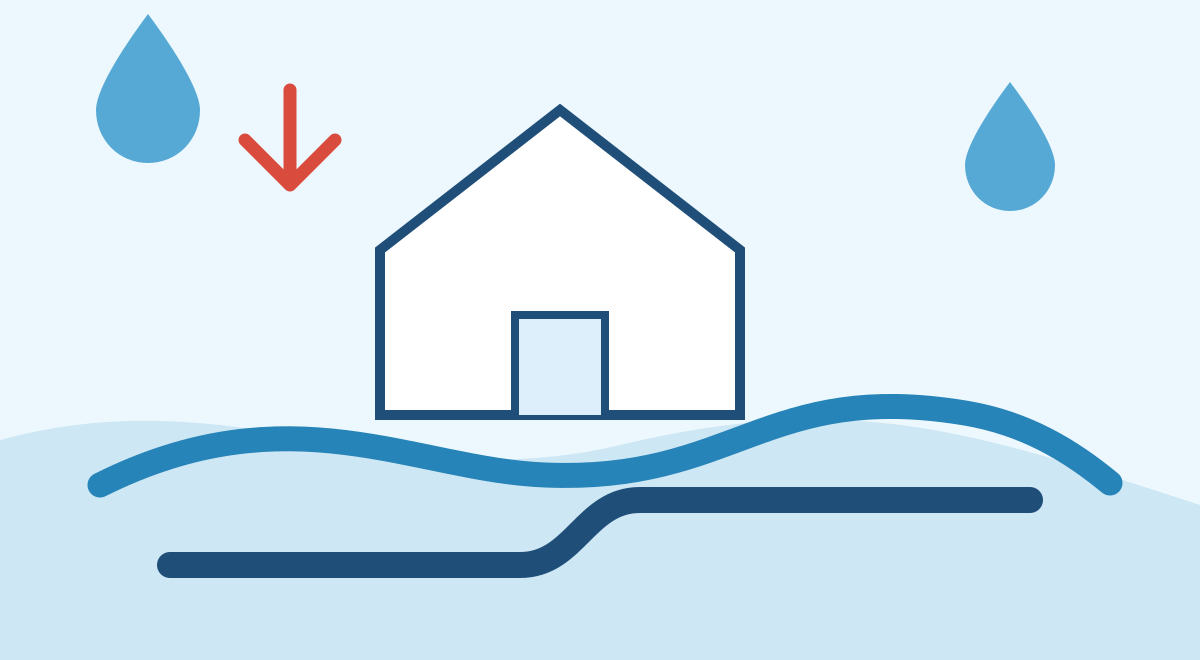
When pipes and channels reach capacity in heavy rain, water follows the land. Auckland’s mapped overland flow paths help show possible routes, but site levels and structures determine the property-specific story.
What the map is showing
Auckland Council describes overland flow paths as natural routes water takes during heavy rain when the stormwater network is full. The mapping is a screening tool based on terrain and modelling, not a measured prediction at every point.
Inspect the whole route across the site
Look at ground levels, channels, low points, retaining walls, fences, garden structures, culverts and neighbouring land. Evidence after rain—debris lines, scour, sediment and ponding—can help frame questions for an engineer.
- Entry and exit points
- Distance and level relative to the building floor
- Pinch points at fences and retaining walls
- Culverts, drains and visible blockages
- Proposed buildings, decks or landscaping in the route
Check before changing the path
Filling, fencing, landscaping or building can alter flow and affect neighbouring properties. Planning, building and stormwater requirements may apply. Use a stormwater or civil engineer where the decision depends on flow depth, levels or mitigation.
Frequently asked questions
Does an overland flow path mean the house will flood?
No. It identifies a potential surface-water route. Building position, floor levels, depth, obstructions and the event all affect practical risk.
Can I build over an overland flow path in Auckland?
Do not assume so from the map alone. The proposal may need planning, engineering and building assessment to show that flow and neighbouring properties are appropriately addressed.
Can a fence block an overland flow path?
Yes, some fence designs, debris or landscaping can obstruct water. Council specifically warns against blocking known flow paths.
Primary sources
- Blocked overland flow paths increase flood risk — Auckland Council
- Understanding Auckland’s regional flood maps — Auckland Council
This guide is general information, not planning, legal, engineering, building, insurance, or real estate advice. Official information and rules can change; verify the current source and obtain advice for your property.