Buying in Auckland
Auckland property due diligence checklist: what to check before you buy
A practical Auckland property due diligence checklist covering title, LIM, zoning, flood risk, consents, insurance, services, and professional advice.
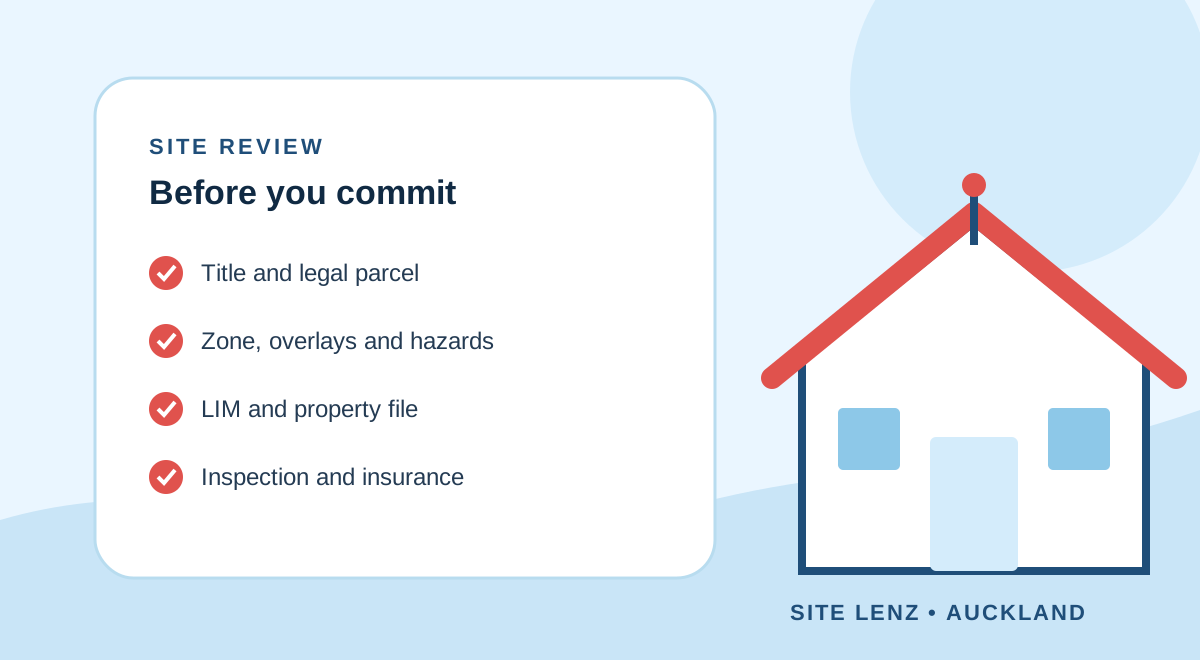
Good property due diligence is a sequence, not a single report. Start with fast public-data checks, then use the result to decide which official records and qualified professionals need closer review before your agreement becomes unconditional.
1. Confirm the legal property and title
Make sure the street address maps to the legal parcel you intend to buy. Ask your lawyer or conveyancer to review the Record of Title, interests, easements, covenants, consent notices, and any cross-lease or unit-title documents.
A map boundary is useful orientation, but LINZ notes that authoritative land-title and cadastral survey records sit within New Zealand’s formal property system. A fence or aerial-image line is not proof of a legal boundary.
- Record of Title and legal description
- Easements, covenants and consent notices
- Cross-lease, unit-title or body-corporate documents
- Survey advice if occupation and title boundaries may differ
2. Check planning controls and hazards
Look up the current Auckland Unitary Plan zone, then check overlays, precincts, designations and qualifying matters. Zone name alone does not determine what can be built.
Review council flood layers for flood plains, flood-prone areas, overland flow paths and coastal inundation. Also consider land instability, coastal hazards, contaminated-land indicators and infrastructure constraints where relevant.
- Zone and applicable standards
- Overlays, precincts and designations
- Flood and coastal hazard layers
- Access, stormwater, wastewater and water-service context
3. Order and reconcile official records
Auckland Council says a standard LIM can take up to 10 working days. Build that lead time into your finance and due-diligence conditions.
Compare the LIM, property file, title, plans and what physically exists on site. Differences—such as an altered layout, added bathroom, deck or retaining wall—are prompts for further investigation, not automatic proof of non-compliance.
- Current LIM
- Council property file and consent documents
- Code Compliance Certificates where applicable
- Comparison of approved plans with the building on site
4. Check physical condition, insurance and costs
Arrange an independent building inspection suited to the property’s age, construction and known risks. Obtain insurance acceptance before going unconditional; a hazard flag can affect availability, exclusions, excesses or price.
Model the ownership costs that do not appear in the sale price: rates, body-corporate levies, maintenance, drainage work, retaining structures, access, development contributions and professional fees.
- Independent building inspection
- Written insurance confirmation
- Finance and valuation conditions
- Rates, levies and near-term maintenance budget
Frequently asked questions
Is a SiteLenz report a LIM?
No. SiteLenz is an early-stage property intelligence report. It does not replace an Auckland Council LIM, title review, inspection, valuation or professional advice.
When should I start due diligence?
Before making an unconditional commitment. If you are using a due-diligence condition, confirm its scope and deadline with your lawyer before signing.
Primary sources
- How to order a Land Information Memorandum (LIM) — Auckland Council
- Planning zones — Auckland Council
- Property ownership and boundary data — Toitū Te Whenua LINZ
This guide is general information, not planning, legal, engineering, building, insurance, or real estate advice. Official information and rules can change; verify the current source and obtain advice for your property.